
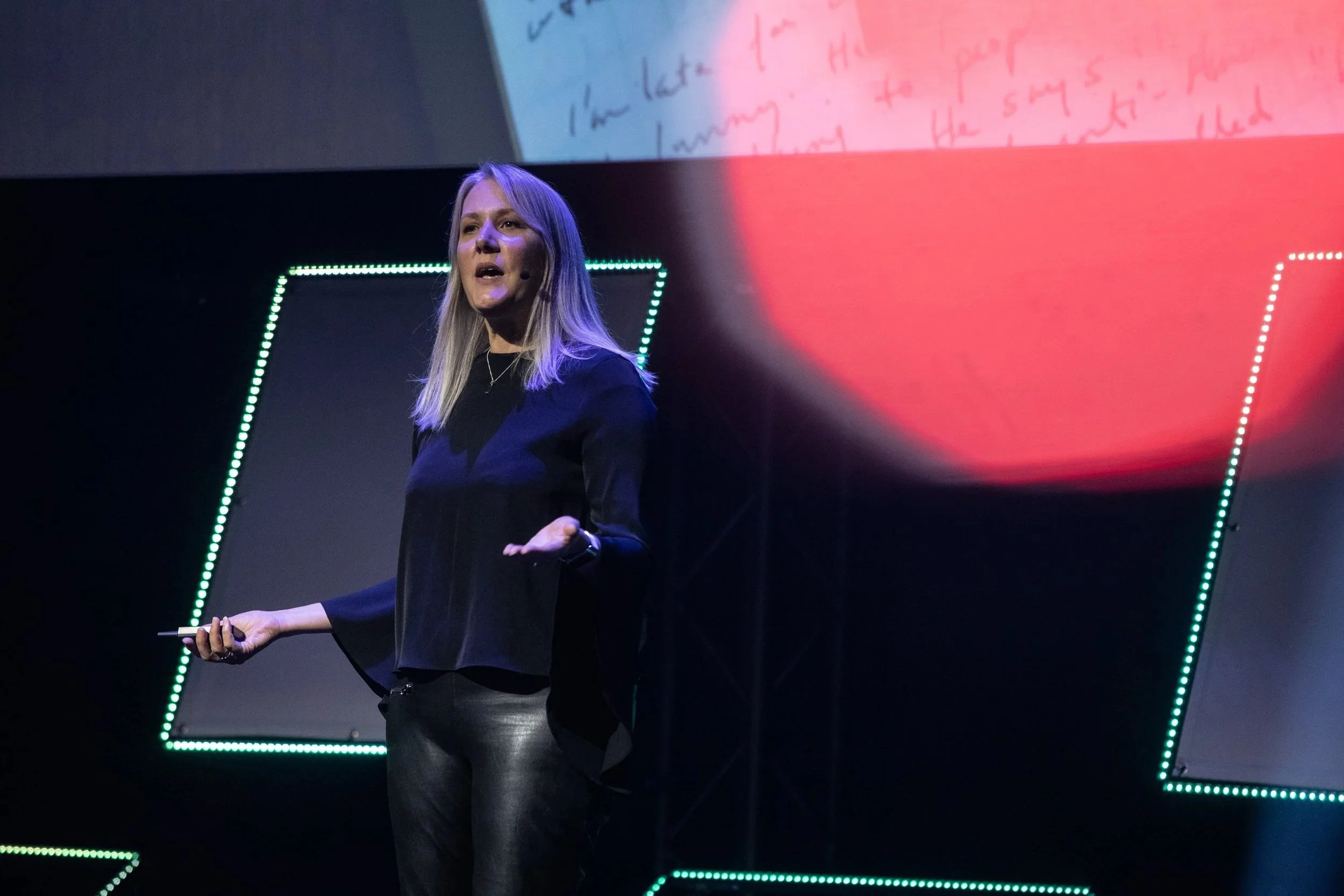
AI at Work Keynote: The Psychology of Motivation in the Age of AI









The Future of Your Business Depends on What AI Can Never Do
The missing piece in your AI transformation strategy
We all know the pitch: AI will cover the grunt work, freeing humans to innovate and strategise and boosting productivity, efficiency, and the bottom line. This utopian vision rings plausible, but omits something central to our humanity. When desire is lost, what disappears with it?
As formerly exclusively human territories are colonised by AI, what humans can or cannot do becomes less salient. What matters more — what has always mattered more — is what humans need. Motivation to work requires something lacking in AI-adoption discourse: desire. For each of us, the desire profile is different. We might crave passion, mastery, recognition, connection, involvement, stimulation, or job security. We might feel driven to fulfil core psychological needs like attachment, freedom, and play.
As AI's dominance increases, we risk the death of desire at work. Like chess grandmasters, as we pursue and capture the prizes of efficiency, productivity, profit, and optimisation, we may end up in an endgame we didn't intend, or worse, a stalemate. With the death of desire, no one wins.
Even experienced change leaders are in uncharted territory. Existing change-management frameworks have no map for this. In this new environment, the most reliable compass is human psychology — specifically cyberpsychology, which examines not just what people need, but how technology can either support or strip away the conditions in which those needs are met.
What does the AI at Work keynote cover?
The death of desire: How unreflective AI adoption degrades the motivational architecture that makes people want to work — not just intrinsic drive, but the extrinsic social and relational conditions through which recognition, connection, and meaning flow.
The omission: The dominant AI-adoption narrative is around what humans and machines each do best, and how to divide the work between them. What humans need is a different question entirely. How leaders respond to it determines whether a transformation succeeds or fails.
What (cyber)psychology shows: The human needs that work has always satisfied — and why AI systems, however social-seeming, cannot replace the human relationships through which those needs are met.
A psychologist's blueprint: A model of psychological flexibility that helps leaders stay oriented toward human values under transformation pressure, building humane, resilient, and competitive organisations in an age of AI.
Why a cyberpsychology lens for an AI at Work keynote?
AI adoption reduces psychological safety, increases workplace loneliness, and without careful design actively erodes the conditions that make people want to show up. A 2024 Harvard Business Review study found that employees who use AI as a core part of their work report feeling lonelier, drinking more, and sleeping less than those who don't. A 2026 HBR study found that productivity gains from AI translate not into freed-up time but into workload creep and burnout.
With advances in AI, our emotional and psychological lives are under a new kind and level of stress. Clinical psychology, counselling psychology, and cyberpsychology are critical to navigating organisational change now.
Who is the AI at Work keynote for?
C-suite leaders, CHROs, and transformation teams navigating AI integration. Future-of-work conferences, strategy events, and corporate retreats. Organisations grappling with what rapid AI adoption means for their people, their culture, and their long-term performance. Available as a keynote, executive briefing, or leadership workshop.
Why book Elaine to speak about AI at work?
AI transformation demands systems thinking, change management, and business strategy. It also needs a deep understanding of what happens to individual human motivation and meaning when work is restructured around machines.
Elaine is a doctor of clinical psychology, an HCPC-registered Counselling Psychologist, and an ICF-accredited coach. She has a practitioner's understanding of psychological needs, what's possible when they're met, and what it costs when they are not — grounded in two decades of cyberpsychology research and practice.
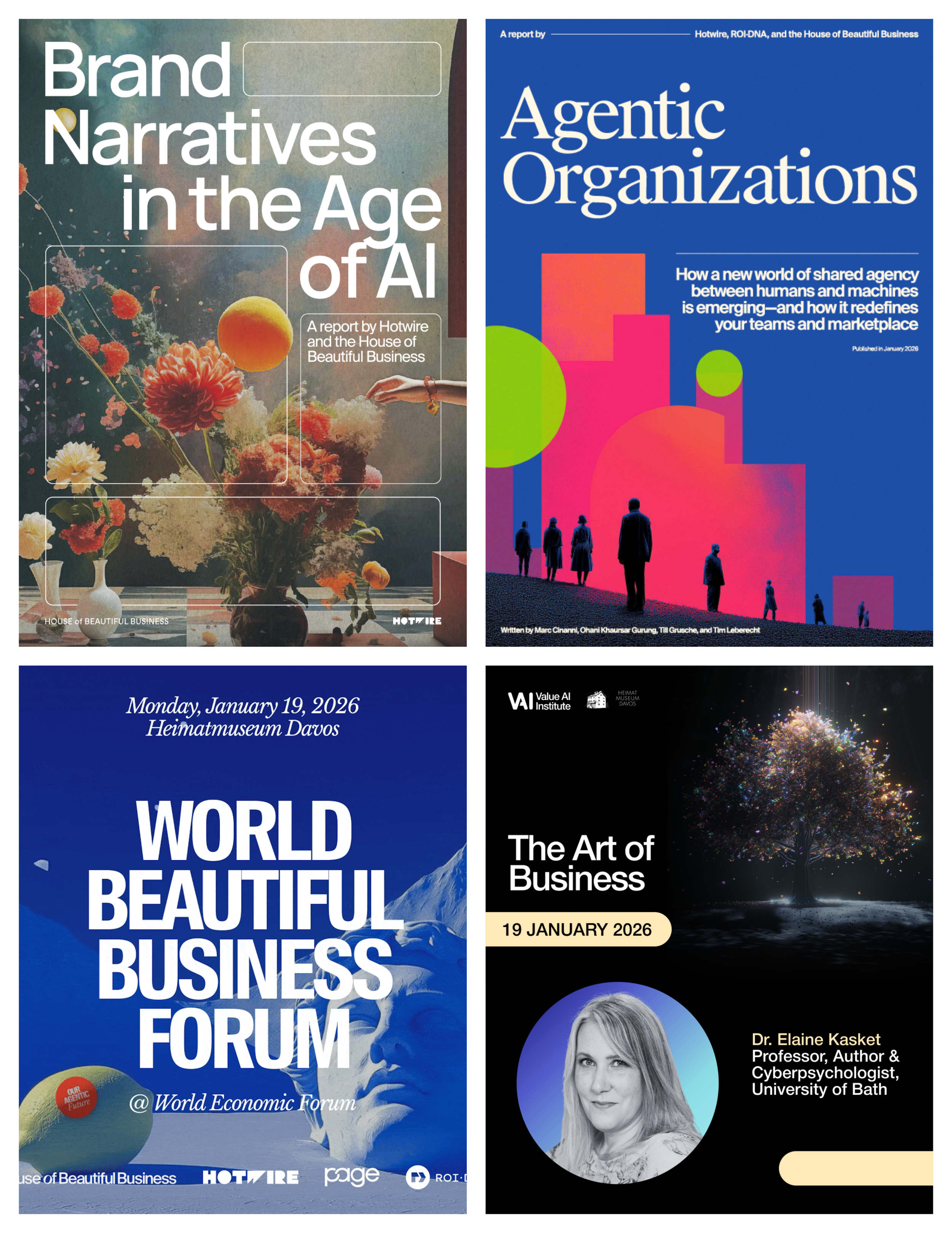
Drawing on self-determination theory, acceptance and commitment coaching (ACC), and her contribution to the Agentic Organizations report launched at Davos 2026, Elaine offers leaders a perspective that organisational and business expertise alone doesn't reach.
To explore her thinking before booking, read her perspectives on agentic AI in organisations, or her book Reset.
What other keynotes can Elaine deliver?
The themes of this talk connect closely to Elaine's other areas of expertise.
AI is increasingly our companion at work — our assistant, our colleague, sometimes our manager. Elaine takes a deeper dive into human-machine connection in her Online Companions and AI Relationships keynote.
Elaine is one of the world's experts on digital afterlives, with implications for business operations, cybersecurity, customer service, and brand. The data of the dead now perform various kinds of spectral labour, with significant consequences for work and society. Elaine's Digital Afterlife: Grief, Technology and AI keynote can be tailored to the workplace context.
If workforce wellbeing in the context of technology is your primary focus, explore Elaine's Digital Wellbeing keynote.
Book Elaine through the Speaking Office
For enquiries contact
Andrew Hickman
The Speaking Office
+44 753 843 8455