
Doomscrolling: Definition, Impact, and How to Stop
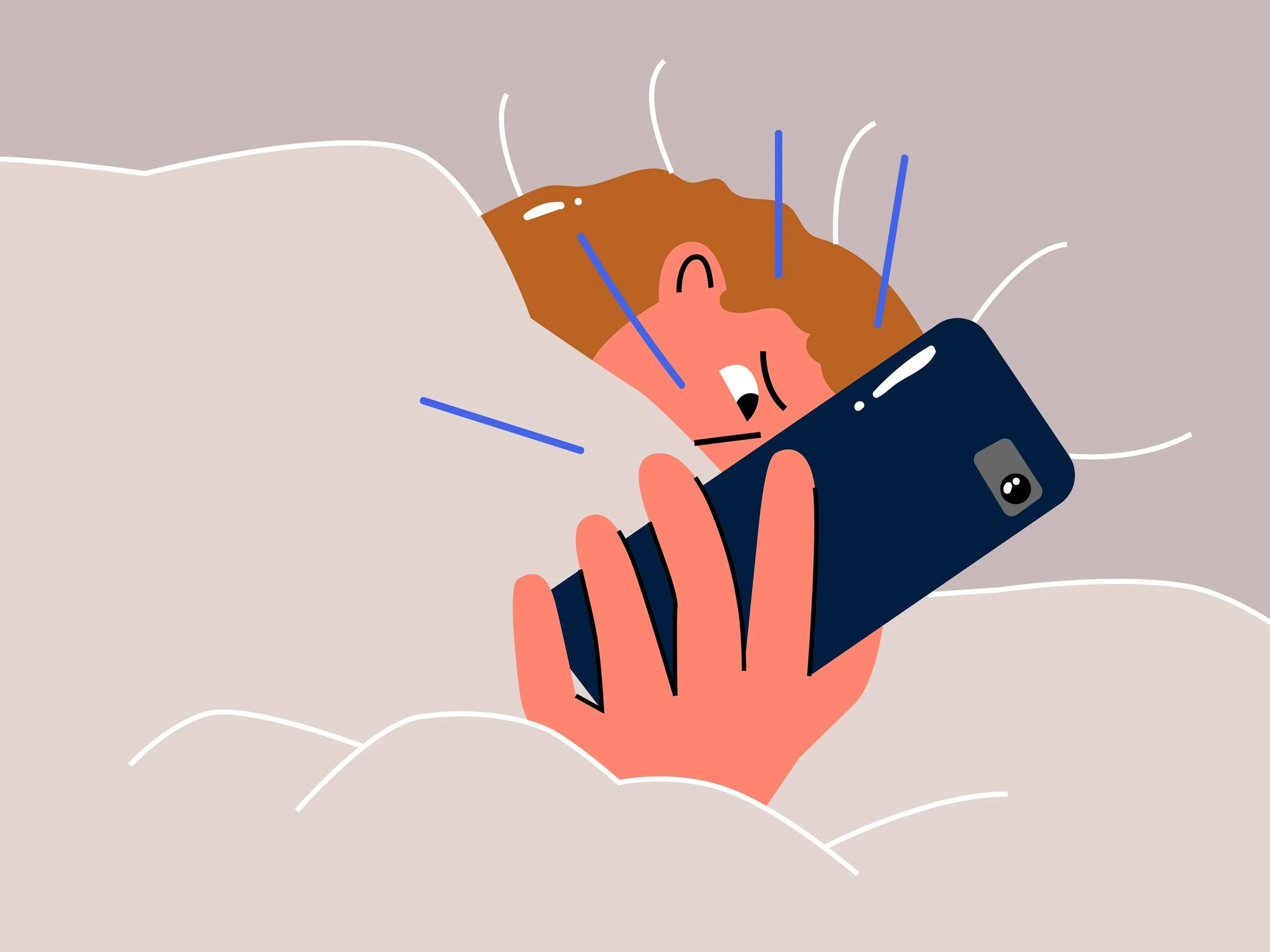
Doomscrolling is far more complicated than we realise. Image from David Palma on Unsplash.
You pick up your phone to check the news, or maybe not the news, but that’s where you end up. Minutes or hours later you're still scrolling, further in than you meant to go, each headline a little worse than the last, and you feel terrible: tense, unsettled, and wired. Yet you keep going, for reasons you can’t quite understand. You become frustrated and angry with yourself, adding another layer of emotions to the stress you already feel.
‘Doomscrolling’ describes the repeated consumption of distressing online content, often driven by a felt need to stay informed, prepared, or safe. The behaviour is common enough to have entered everyday language, but the psychology behind it runs deeper than most accounts suggest — and the platforms delivering it are not neutral conduits.
Key Takeaways
Doomscrolling is the repeated consumption of negative or distressing news and social media content, often for longer than intended and with increasing emotional strain.
The behaviour is driven less by poor self-control and more by the brain's evolved response to uncertainty and perceived threat — and by digital environments engineered to exploit that response.
Prolonged doomscrolling is associated with increased anxiety, mental fatigue, disrupted sleep, and reduced emotional balance.
Digital platforms amplify doomscrolling by prioritising emotionally charged content and removing natural stopping points. This is by design, not by accident.
Learning how to stop doomscrolling involves restoring boundaries around attention, recognising emotional triggers, and re-engaging with the physical world more deliberately.
As you're reading, keep in mind that I speak internationally on doomscrolling, digital wellbeing, attention, and the psychological effects of living in always-on information environments.
If you're looking for a keynote speaker, workshop facilitator, or panellist on these topics, explore my speaking page.
You can check out my podcasts for some audio insights, or read/listen to my book about digital wellbeing across the lifespan:
What Is Doomscrolling?
Doomscrolling is the repeated engagement with negative, alarming, or emotionally charged online content — particularly news and social media. You scroll longer than you meant to and feel worse for it. The term is informal, but the pattern is real and recognisable.
The behaviour surged during the COVID-19 pandemic, when uncertainty and rapid news cycles drew people into heavier reliance on digital information. But doomscrolling is not confined to global crisis. It surfaces whenever people feel a heightened need to stay alert — a contested election, a war, a cost-of-living crisis, a wave of layoffs.
You check one update, then another, driven by the sense that staying informed is responsible. The content grows more distressing, yet disengaging feels difficult. The behaviour is most pronounced late at night or during fatigue, when emotional regulation is already stretched thin.
The Psychology Behind Doomscrolling
Doomscrolling is commonly framed as a failure of self-control — the individual couldn't resist, couldn't put the phone down, should have known better. I think this framing is wrong, or at least incomplete. It places blame squarely on the person and lets everything else off the hook.
The behaviour reflects how the mind responds to uncertainty under a constant flow of alarming information. We are wired to notice danger — attending to threats supported survival. In digital environments, this instinct is activated without pause. News feeds and social platforms surface content that signals risk, conflict, or urgency, often without resolution. The mind stays alert, scanning for meaning or reassurance, even when doing so increases distress.
Information-seeking can temporarily reduce uncertainty, which is why scrolling feels compelling in anxious moments. But when the volume and tone of information exceed your capacity to process it, the effect reverses. Instead of restoring control, repeated exposure to distressing content heightens vigilance. The nervous system remains engaged long after any genuine need for awareness has passed.
Intermittent reinforcement also plays a role — updates arrive unpredictably, and occasionally something appears that feels clarifying or validating. This unpredictability keeps attention hooked, even when the overall experience is unsettling. Over time, the behaviour becomes habitual, particularly during stress or fatigue.
It's called doomscrolling, but it could equally be called doombaiting. The algorithmic environment we inhabit skews towards the negative. Strong negative emotions — outrage, fear, indignation — drive engagement, and engagement drives the online economy. We're drawn into reacting, flooded with negativity, and pulled towards feeling we need to respond in kind to be heard. But reactive engagement doesn't make us more powerful or informed. It's a downward spiral that profits someone else.
Digital behaviours reflect emotional states, not character flaws. Doomscrolling appears alongside anxiety, uncertainty, or a felt responsibility to stay informed. In environments designed to prioritise attention and rapid response, these needs are amplified rather than soothed. Framing doomscrolling as an attempt to manage uncertainty — rather than evidence of weakness — points us towards the forces that sustain it, including the environments that exploit it.
The Impact of Doomscrolling: Anxiety, Fatigue, and Numbness
Doomscrolling's effects accumulate gradually. Repeated exposure to distressing content keeps attention trained on threat, feeding tension, mental fatigue, and emotional strain. Prolonged engagement leaves people depleted rather than informed.
Late-night doomscrolling disrupts sleep and makes it harder for the mind to settle. When rest is compromised, mood regulation and concentration suffer. You may feel mentally alert yet physically exhausted, with diminished capacity for focus the following day.
Over time, constant exposure to negative narratives narrows emotional range. The mind anticipates bad outcomes more readily. Emotional withdrawal can emerge — not a failure of empathy, but a protective response when the load exceeds what the nervous system can carry. You haven't stopped caring. Your brain is trying to protect you.
Why Is It So Hard to Stop Doomscrolling?
The Trap of Variable Rewards
Doomscrolling persists because digital platforms are designed to sustain attention, not encourage closure. Content arrives in unpredictable sequence, varying in emotional intensity, relevance, and novelty. The mind keeps anticipating something important or clarifying next.
Stress and anxiety compound this. Infinite scroll removes natural stopping points, making it harder for the brain to register completion. What begins as a purposeful attempt to stay informed extends beyond intention, leaving you restless rather than reassured.
I think of the infinite scroll as one of the most psychologically consequential design choices of the digital age. A newspaper has a last page. A television bulletin has a sign-off. Your social media feed has neither. The absence of an ending is the product. When there is no natural point at which you feel you've 'finished,' the platform wins and your attention loses.
Micro-Validation and False Connection
Social platforms also reinforce doomscrolling through small signals of feedback. Likes, shares, and comments offer brief moments of recognition or belonging, even when the surrounding content is distressing. Shared outrage or concern can feel emotionally connective in the moment.
But this connection is thin — emotional arousal without understanding, support, or resolution. Over time, people associate heightened intensity with engagement itself, and calmer forms of interaction start to feel flat. The quiet conversation with a friend seems boring beside a thread with thousands of reactions. That shift in baseline is worth noticing.
Fear, Identity, and Belonging
Doomscrolling is also shaped by something harder to name: moral pressure. When wars are unfolding, when people are suffering, when the issues feel enormous and urgent, stepping away from the feed can feel like stepping away from your own conscience. You worry that calibrating your news exposure makes you selfish — fiddling while Rome burns, rearranging deckchairs on the Titanic. If you mention to someone that you've been limiting your intake, will they think you don't care?
Many of these issues sit firmly in what Stephen Covey called the circle of concern — things that trouble us deeply but lie beyond our direct influence. Staying informed about them feels like the minimum a decent person can do. But consuming distressing content for hours doesn't make you a better citizen. It depletes the psychological resources you'd need to act where you can make a difference. The guilt keeps you scrolling; the scrolling erodes your capacity to respond.
In online spaces, this moral pressure intensifies. Participation signals awareness. Sharing signals solidarity. Silence risks being read as indifference. Stepping back can feel like betrayal of the communities you care about, even when continuing is hollowing you out.
Reducing doomscrolling requires more than willpower. It requires recognising how emotional needs, moral identity, social expectations, and platform design interact to sustain the behaviour — and giving yourself permission to protect your capacity to care by limiting your exposure to the machinery that exploits it.
How to Stop Doomscrolling
Reducing doomscrolling is less about discipline and more about creating conditions that support psychological balance — then making adjustments that restore agency.
Create Boundaries That Support Attention
Doomscrolling thrives where there are no natural stopping points. Structure helps.
Setting specific times to check news or social media reduces constant monitoring. Turning off non-essential notifications removes the prompts that pull you back in. These shifts move the digital environment from continuous invitation to deliberate choice.
The aim is clarity about when and why you engage, not restriction for its own sake. Attention is easier to protect when the boundaries are external as well as internal — because willpower, as any psychologist will tell you, is a limited and unreliable resource.
Replace Habitual Scrolling With Restorative Alternatives
Stopping a behaviour without replacing it rarely sticks. Doomscrolling fills moments of fatigue, stress, or emotional overload, so alternatives need to support regulation, not stimulation.
Activities that involve the body or the physical environment help restore balance — walking without a phone, reading something physical, writing before bed. They create space for the nervous system to settle and for attention to rest without constant input.
I sometimes suggest people think of it as designing something in, rather than cutting something out. Reduction without replacement is deprivation. And deprivation doesn't stick.
Notice Emotional Triggers
Doomscrolling is prompted by emotional cues more than conscious decisions. Boredom, loneliness, anxiety, a sense of responsibility — any of these can trigger the urge to check. Noticing these states makes it possible to pause before acting on them.
When the impulse to scroll arises, ask what you're seeking. Reassurance? Distraction? Connection? Recognising the underlying need opens the possibility of meeting it in ways that don't deepen distress.
If what you're feeling is guilt — the sense that you should be watching, that looking away makes you a bad person — notice that too. Ask yourself whether the last hour of scrolling made you more capable of helping, or less. Informed citizenship requires the capacity to think, feel, and act. Doomscrolling erodes all three. Protecting your mental resources isn't indifference — it's maintenance. You cannot pour from an empty vessel, and the attention economy is designed to empty you.
If someone questions your boundaries, you don't owe them an apology. Choosing not to marinate in distress you cannot act on is not the same as not caring. It's the precondition for caring well.
Visualising the mechanism can help. Think of a baited hook. You see the bait — the alarming headline, the outrage post, the emotional provocation — and you feel the pull. The work is learning to swim past it, to recognise the bait for what it is, and to ask yourself what you actually gained the last time you bit down.
Reclaim Your Mental Space
Shift from consumption to intentional curation; attend to what deserves your attention rather than what demands it. You might limit exposure to certain topics, choosing fewer and better sources, or creating periods of disconnection.
Pause before unlocking your phone and take a few slow breaths. Small practices like these restore choice in moments that would otherwise feel automatic. Re-engage with the physical world through relationships, creativity, and rest, reminding yourself through practice (not just through telling yourself) that not all meaning arrives through a screen.
You don't have to become a digital monk. The goal is discernment, not disconnection. Can you hear yourself think? Can you notice how you're feeling before, during, and after you scroll? Can you choose, rather than be pulled?
If those capacities feel diminished, the cause is environmental, not personal — they've been undermined by systems designed to capture attention at scale. Rebuilding them is possible, but it asks for patience, structure, and honest reflection about how you spend your hours.
From Doom to Discernment
Doomscrolling reflects the conditions we live in as much as individual choice. Reducing it doesn't mean disengaging from the world — it means noticing when your attention is being pulled and choosing how and when to engage.
Get angry, if you're going to get angry, about the manipulation — that the algorithmic environment treats your distress as a resource to be harvested. Then channel that energy into rebuilding internal guidance: noticing, feeling into things, trusting yourself. That requires enough quiet, enough space, enough freedom from the attention-extraction machine to hear what you actually think.
Frequently Asked Questions About Doomscrolling and Digital Wellbeing
Is doomscrolling a mental health condition?
No. Doomscrolling is a behavioural pattern, not a diagnosis. It can accompany anxiety, stress, or emotional overload, but it's a response to prolonged exposure to distressing information — often in environments designed to sustain that exposure — not a mental health disorder.
Can doomscrolling increase anxiety?
Prolonged exposure to alarming or emotionally charged content can heighten anxiety and tension, particularly when it disrupts rest or keeps attention trained on threat. News and social media are not inherently harmful, but sustained exposure without boundaries can erode emotional balance.
Why is doomscrolling worse at night?
Fatigue reduces emotional regulation and makes disengagement harder. Late-night scrolling also interferes with sleep, which in turn affects mood and concentration the following day. The cycle feeds itself — poor sleep makes you more vulnerable to the pull the next evening.
How can I stop doomscrolling without disconnecting completely?
Reducing doomscrolling doesn't require avoiding digital media altogether. Set clear times for checking news. Limit exposure before bed. Turn off non-essential notifications. Notice the emotional triggers that lead to scrolling. Design something restorative into the space you create. Small structural changes tend to work better than relying on willpower, because willpower is a finite resource and the platforms are designed to outlast it.
Is doomscrolling caused by social media algorithms?
Platform design plays a significant role — algorithms prioritise emotionally charged content and remove natural stopping points. But doomscrolling emerges from the interaction between human psychology, emotional needs, and digital environments built to capture attention. The system and the psyche are both implicated. Blaming yourself is unhelpful; so is pretending the platforms are innocent.